
Decaf Coffee Cake and Muffins +
Or, What to do with Leftover Bits. Whole Grain Coffee Cake Recipe Below.

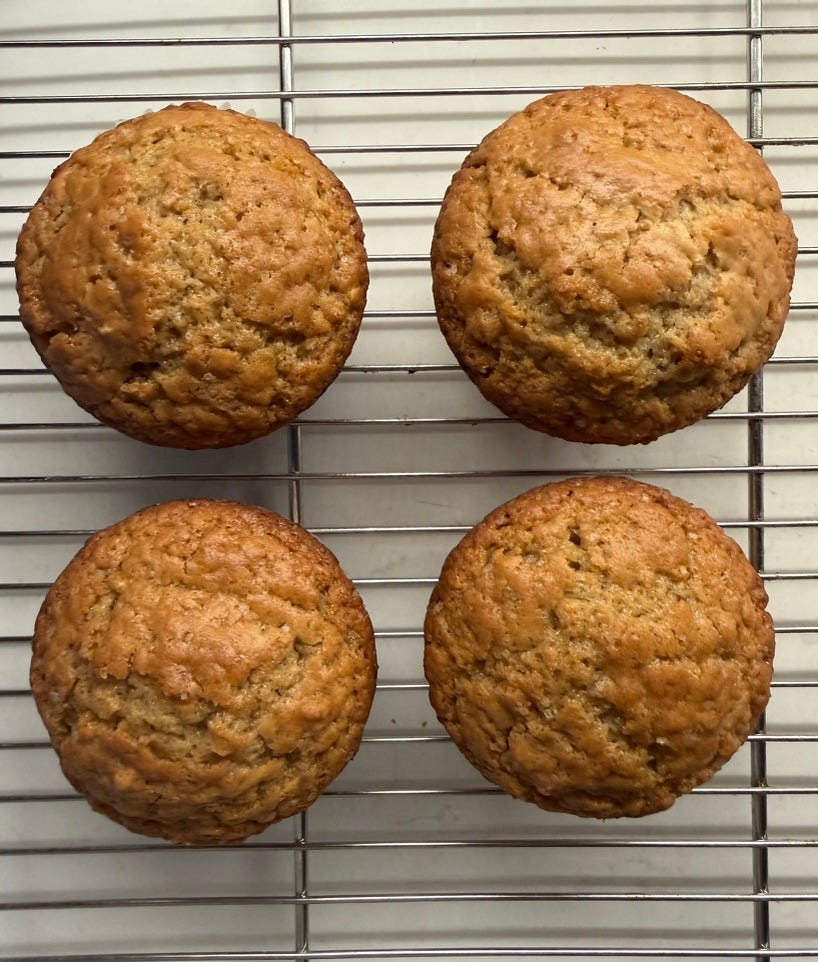
Coffee Muffins +
Or, What to do with Leftover Bits.
(Whole Grain Coffee Cake Recipe Below)
At this point you must think I’ve gone muffin insane, but muffins are a simple and practical way to use up ingredients. Any of these things are pretty much pancakes in waiting, so turn anything that could be a muffin into a pancake if you want. But I think for most people muffins are more convenient.
I could easily throw in leftover cooked grains, yogurt, whey, limp vegetables, cooked vegetables, leftover pickles or even brines, small amounts of sauces, fresh or cooked tofu, cheese scraps, egg yolks or whites, etc.
Muffins can easily be made gluten free, or vegan, but I’m in the middle of developing a recipe I’ve tried many times before that uses wheat flour so I wanted to make sure it’s perfect before releasing it. It will completely blow your mind. Fascinate your taste receptors. And guess what? I always have small amounts of different flours hanging out so I used an all purpose blend. Anything with gluten will work.
These coffee (decaf leftovers) muffins that could easily be made into a tea cake as well as pancakes instead of muffins, are incredibly tasty. They include ingredients I want you to know how to bake with - or steam like an old school pudding - as well as encourage you to ask the most crucial questions I want you to ask: What if I don’t have a specific ingredient? Even more importantly, what if I can’t afford or access an ingredient? These last two questions are what drive every thing I do.
This muffin recipe intentionally uses all purpose flour. You can use whole wheat or a gluten free flour mix - I use a whole grain pastry flour in a cake version of this, below - which is essentially a different recipe. Did I mention these are ridiculously fast to make?
Ingredients
All-purpose flour – 210 g (1 3/4 cups)
Turbinado sugar – 140 g (2/3 cup)
Baking powder – 9 g (2 1/4 teaspoons)
Baking soda – 1 g (1/4 teaspoon)
Salt – 2 g (1/3 teaspoon)
Large eggs – 100 g (2)
Oil or melted butter – 75 g (1/3 cup)
Decaf coffee, cooled – 120 g (1/2 cup)
Whole milk or plant-based yogurt – 60 g (1/4 cup)
Vanilla sugar – 12 g (1 tablespoon)
Cocoa powder – 3 g (1/2 teaspoon)
Method
Preheat oven to 425°F / 220°C.
Line or grease 6 muffin wells. If using a larger pan, fill empty wells with water for heat stability.
Blend or whisk flour, turbinado sugar, baking powder, baking soda, salt, and cocoa.
Whisk eggs, oil, coffee, yogurt, and vanilla sugar until fully combined.
Combine wet and dry. Fold just until flour disappears. Batter should be thick and mound slightly when spooned.
Fill wells completely full, slightly mound the center above the rim.
Bake at 425°F / 220°C for 7 minutes.
Without opening the oven, reduce temperature to 375°F / 190°C and continue baking 15 more minutes.
Remove from oven. Cool 5 minutes in pan, then remove the muffins.
Subscribe here for free, or $5 a month, or $30 a year first, then register at Zoom for the event. The event is free for everyone, but not if you are not subscribed to us at Substack. We don’t do replays, but paying members can access curated and edited videos when they are completed by our volunteers. Eventuallly, all past events will be in the archives. Lots of new videos too for Substack Subscribers to CulturesGroup
No Fee Events only for Substack Subscribers to CulturesGroup (https://culturesgroup.substack.com/subscribe
Koji +/-
https://us06web.zoom.us/meeting/register/rzdUGXT8TP-8Uw-a-8QHOA
MAR 22, 2026 - NY: 9:00 AM | UK: 1:00 PM | INDIA: 6:30 PM
With Kirsten K. Shockey, Melissa Hoffman, Ken Fornataro, and Caspar Hall of zizinia,
This event centers around making, and using molds that typically contain Aspergillus species. Almost every Asian country has their own culture such as qu, nuruk, bubod, chuzo, jui paing, phabs, marcha, loog-pang, banh men, koji, and ragi. The original 麹, or Qu contained molds, bacteria and yeasts. The Japanese used the same kanji, or letter of the Chinese alphabet 麹, but isolated out just the Aspergillus microbes from these starters. They call it koji. Japanese koji is typically a mono-culture, or only Aspergillus, but once it is grown on a substrate bacteria and yeasts and possibly even other molds are involved.
We’ll focus on using B.subtilis, the bacteria that creates flavor and functionality in the Japanese food called natto, by itself or when combined with the monoculture called koji. We’ll also demonstrate using the B subtilis bacteria on soy and non soy systems to maximize MK-7. Vitamin K2 (MK-7) is what you really want from Bacillus subtilis ferments, with the PGA or goopy stuff called neba neba just an enzyme. Not all B.subtilis based ferments taste the same, nor do they function the same way in the body because of varying amounts of MK-7.
We’ll also address what happens when you make other alkaline ferments or use ash or nixtamalize ingredients, including corn.
We’ll also discuss making vinegars with koji, or not, and how that works. Also, mixing koji with Rhizopus strains to make tempeh from beans, nuts, grains, etc. in order to make cakes and breads, syrups, and beverages. Plus any basic questions you have about anything in general, troubleshooting, etc.
Tempeh: The Other White Mold. Rhizopus the Great!
https://us06web.zoom.us/meeting/register/zt1KfX2PS-CHH63fdeZRUQ
April 12, 2026 - NY: 8:00 AM | UK: 1:00 PM | INDIA: 6:30 PM
Spice, Cheese, Bilād al-shām
https://us06web.zoom.us/meeting/register/YX4aU7J-RkKGR18tebJfug
MAY 16, 2026 - NY: 11:00 PM | UK: 4:00 AM (MAY 17) | INDIA: 8:30 AM (MAY 17)
Milho/Maize (Português e Inglês / Portuguese and English)
https://us06web.zoom.us/meeting/register/NJYDLaOkSYqaF-c577Lm9g
Sept 11 NY: 2:00 PM | UK:7:00 PM
Asian Cultures and Ferments
https://us06web.zoom.us/meeting/register/sdaQgMFOS9aOcYK6OUSbsg
OCT 25, 2026 - NY: 9:00 AM | UK: 1:00 PM | INDIA: 6:30 PM
AltStarch / AltSugar / AltGrain
https://us06web.zoom.us/meeting/register/f6WOj4_YRB-qoDEGtGfsCQ DEC 13, 2026 - NY: 7:00 AM | UK: 12:00 PM | INDIA: 5:30 PM
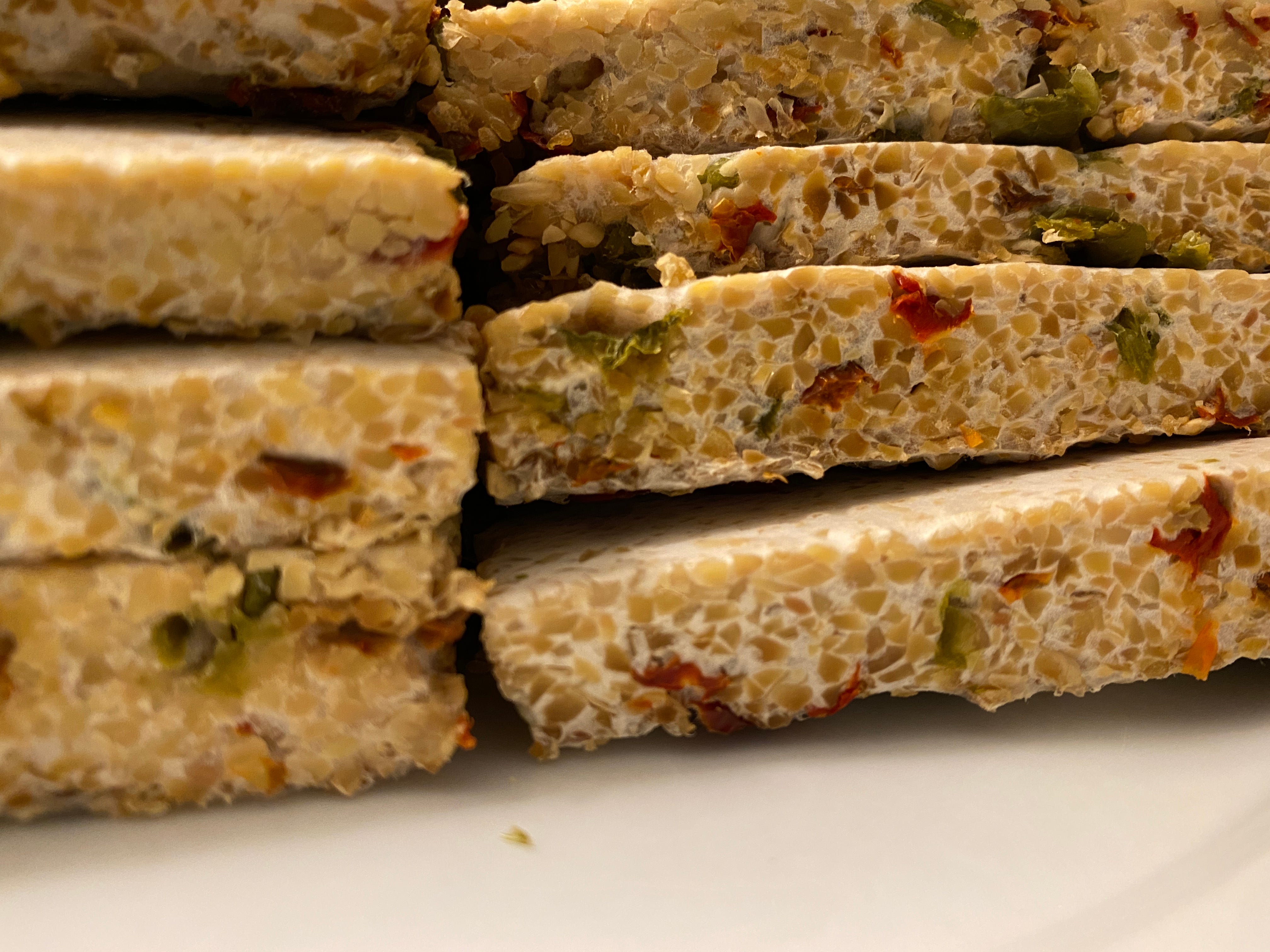
Recipe Below