

“I’ve been passionate about traditional bread-making techniques since the 1980’s, when I first encountered the mysterious salt-rising bread. As Susan Brown and I uncovered the history and science of salt rising bread, we kept finding other breads across different locations in the world that use the identical 3-stage fermentation method with bacteria but with different substrates – like chickpeas or lentils”
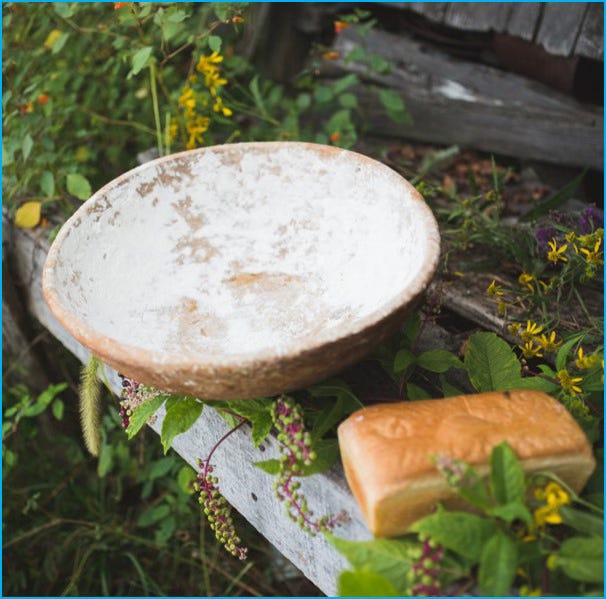
Yeast Free Breads
An interview with Genevieve Bardwell
Ken Fornataro: Welcome, Genevieve Bardwell. I’m thrilled to have you here to discuss the interesting world of yeast-free breads. Your research into traditional bacterial leavening methods has uncovered some intriguing information. What first enticed you to explore this lesser-known aspect of bread fermentation?
Genevieve Bardwell: Thanks for talking with me. I’ve been passionate about traditional bread-making techniques since the 1980’s, when I first encountered the mysterious salt-rising bread. As Susan Brown and I uncovered the history and science of salt rising bread, we kept finding other breads across different locations in the world that use the identical 3-stage fermentation method with bacteria but with different substrates – like chickpeas or lentils.
This has led me down a path of uncovering the history of these somewhat forgotten, yeast-free fermentation traditions. We’re talking about breads such as Eftazymo from Greece, Karahoyuk from Turkey, and Arcatena from Cyprus, which all use chickpeas. Then there is the Gergoush bread from Sudan that uses lentils plus milk.
Ken Fornataro: Most people associate bread fermentation with yeast, but as you’ve highlighted, there’s an entirely different world of bacterial fermentation for bread. Can you tell us about the key bacteria involved in yeast-free bread fermentation and how they contribute to the leavening process?
Genevieve Bardwell: The primary bacteria involved in all these breads include species from the Bacillus, Clostridium, and Lactobacillus genera. Clostridium perfringens is commonly associated with foodborne illness, but has a much safer role in the controlled fermentations of these yeast-free breads.
Check out the science article I helped write that shows there are no toxins produced in salt rising bread, nor do the Clostridium bacteria have the genes for these toxins. We were very excited to find this out back in 2008, even though people have been baking and consuming salt rising bread since the 1700’s, with never any record of anyone ever getting sick.
The fermentation of these bacteria produces gases, mostly hydrogen and then some carbon dioxide, as well. Since hydrogen is a lighter gas than carbon dioxide, this makes these breads have an appealing dense crumb. The production of volatile compounds like butyric acid and other enzymes play an important role in the distinct, cheese-like aroma and flavor profiles.
Ken Fornataro: Can you tell us more about how traditional methods ensure the safety of these breads?
Genevieve Bardwell: That’s an important point. Traditional fermentation conditions—such as maintaining specific temperatures usually around 40°C (104°F), and the substrate of the foods—may help suppress harmful bacterial growth. Scientists don’t know enough about these bacteria to explain why there are no toxins produced in these breads. It may have to do with bacterial genetics and how toxin genes are often carried on plasmids, which the bacteria in salt rising bread tend not to have – but that is getting way too technical.
For now, let’s just say that proper fermentation techniques and recipes passed down through generations play a huge role in ensuring food safety. I have recipes for each of these breads on my website (https://sites.google.com/view/yeastfreemysterybreads/) and glad to help support anyone interested in making these breads. I offer support because the yeast-free method is not always intuitive, so I have included some tips in the recipes that I suggest bakers follow.
And perhaps more interesting, is that all these breads - whether the substrate is corn, potatoes, lentils, or chickpeas – attract the identical microbial fingerprint with Bacillus spp., Clostridium spp,, and Lactobacillus spp. appearing in this order during the fermentation.
I am not a microbiologist, but why is it only these bacteria? Is it just coincidental that these bacteria happen to produce enough gases to raise bread dough? Let me also share with our audience that besides the hard science microbial analysis that has been conducted to show that all these breads have an identical bacterial profile (see my website for references), these breads also have an identical smell during that first fermentation stage, called the “starter.”
Since I have been able to research these breads in their home countries, I have smelled the starters in Greece, Cyprus, Turkey, and of course Appalachia, and they all smell the same!
Ken Fornataro: There are only 2 traditional fermentation methods that raise a dough: Yeast and the Yeast-free method with bacteria. Have you come across any other fermentation methods that raise a bread dough? Enzymatic leavening by fungi like koji or Qu starters seem to be all the rage. (Continues behind paywall)
Koji (+/-) Bacillus, Rhizopus, Mucor
https://us06web.zoom.us/meeting/register/rzdUGXT8TP-8Uw-a-8QHOA
MAR 22, 2026 - NY: 9:00 AM | UK: 1:00 PM | INDIA: 6:30 PM. With Kirsten K. Shockey, Melissa Hoffman, Ken Fornataro, Anthony DELFAU and Caspar Hall of zizinia
CulturesGroup is a multi-media event. To read posts, watch videos, and attend events like the ones listed above, become a paid subscriber. $5 USD Monthly.
CulturesGroup - https://culturesgroup.substack.com/subscribe
 | A guest post by
|